Tuesday, July 31, 2007

Haruki Murakami - The Elephant Vanishes


Murakami's rather oddball short story collections have a different tone from his novels. His novels can be a bit too much for the palate; but his short stories are minor masterpieces, no matter which field you're coming from. Each short story ends on a most unsatisfying note; admittedly, so do his novels, but the average reader has long quit attempting to understand the vagaries of the semblance of a story-line. His short stories, on the other hand, are short enough to warrant an extended span of attention, yet quirky enough to leave you hesistant to flip the page to the next one too soon.

This book will leave familiar shivers bristling down your spine; elements of the Wind-Up Bird Chronicle proliferate. The first story is apparently the inspiration behind said novel; and that infernal Noburu Wataya character materialises in half the short stories.

Each story chills the soul in its own unique way. Fans of Raymond Carver will immediately recognise the parallels; but Murakami turns 20/21st century urban fiction into his own plaything. Even short story titles reek of postmodernism; the Kangaroo Communique and the 100% Perfect Girl entice the reader, drawing him in to find out more.

He spins little quirks into each character; they routinely have chance encounters on similarly chance streets, they routinely miss each other and have lapses in communication. Carver's style is, however, more depressing, more morose, while Murakami is ready to portray his wonder at the incomprehensibility of the world.

A very good effort, and a perfect introduction, not just to Murakami's short stories, but even to the entire genre of postmodern short stories as a whole.

This book gets a perfect score, for being vintage Murakami.

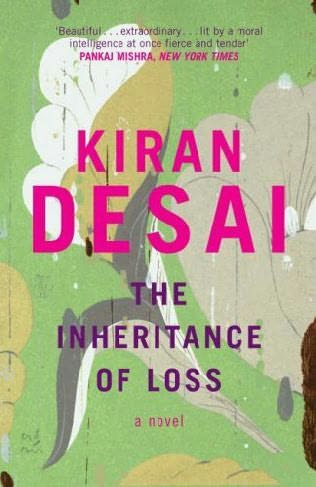
Kiran Desai - The Inheritance of Loss


To be frank, the only reason I picked up this tome was its Booker Prize credentials. (And let's just say I have a rather perverse interest towards the Indian community at large. It's all history.) And I was sorely disappointed at the stereotypes prevalent throught. However, I will not let them detract from the overall level of detail, exquisite even, accorded to each character in the novel that, in my culturally tinted eyes, redeems it a little.

The tale tracks the passage of two characters - 16-year-old Sai, newly orphaned and living with her grandfather in the most remote of mountain passes, and her fledgling romance with her Nepalese tutor Gyan; and the contrasting fortunes of Biju, her grandfather's cook's son, ekeing out a meagre existence in the squalour of Manhattan's decrepit restaurants.

Throughout, issues of culture are tackled, but on, sincerely speaking, a very superficial note. The Indian illegal immigrant point is weakly driven home; we see no development of character of Biju, just a constant struggle to survive each day till he takes home his pay. Sai and Gyan's relationship is as wooden as wooden can be; it meanders along the tried-and-tested girl-meets-boy course, exhibiting no new tricks, no fancy plot twists, no emotional insurgencies, just a rehashing of a very well-worn plot.

Still, Kiran Desai describes well; that has to be admitted. Her characters, though rather flat as carbon copies of traditional stereotypes, are full of life, vivacity, and above all, action. Each action is embellished with detail, detail of how they move, walk, talk, cleverly paralleling the (again steretypical) television montage of India as a riot of colours and action. The cold and calm Indian border region is enlivened by little flourishes of description, rendering a multifaceted imagery of the stark scenery.

Once again, not a wise choice if what you seek is originality of cast or screenplay; but for sheer descriptive value, each character, each location, each circumstance, is played out with the note range of an Indian sitar.

I give it a 7 out of 10.

Louis de Bernieres - Senor Vivo and the Coca Lor


One of Louis de Bernieres's earlier works, before Captain Corelli's Mandolin catapulted him into instant notoriety - and the indignity of a subpar movie to boot - this novel reflects the writing characteristic of his salad days, where he was happier exploring the intricacies of relationships via a less conventional, more disjointed light.

A very porous narrative follows. The tale tracks an anti-coca warlord through a litany of dangerously tiring trials - from simple threats to the final disastrous deaths of his loved ones. All the way, the narrative eye flits from group to group, highlighting the diversity of issues afflicting those forced to live under the penumbra of the raging coca trade of Colombia.

The prose wittily skewers the multifarous problems of combating the coca trade - as the narrative develops, the continuity concurrently degenerates, skilfully exposing the extent of government corruption in the unravelling of any concerted effort to weed the coca lords out. The narrative style itself is an apt allegory of the futility of said efforts; the longer the government tries, the bolder the coca lords.

Throughout the book, the emphasis is not so much on plot as on character; it is almost as if the tale of the coca trade is best played out through the vignettes of each individual. Each character in the novel reflects a disparate group in Colombia, be it the petty government official frustrated because his hands are tied, the average citizen whose sole role throughout is to provide a social commentary, or the coca lords themselves, who hungrily play the system for what it is worth.

In typical de Bernieres fashion, especially in his earlier works, the humour is understated yet playful; each character is subject to a series of idiosyncracies that expose their fallacies in a slapstick fashion. You will enjoy this read, but let me warn you, if you are the Korean drama type, cherishing solid storyline over artistic license, you will be sorely let down.

I give it a 7.5 out of 10.

Haruki Murakami - Hard Boiled Wonderland and the End of the World


One of Murakami's earlier works, and one heck of a definitive one. Murakami practically LAUNCHED his career in surrealist writing via this book (Norwegian Wood being more of a poppy introduction to the man himself), endearing himself to the masses who constantly seek quality fiction with more twists than the entire Harry Potter series.

The story involves 2 converging plotlines (though, to be fair, at the end they don't EVEN converge coherently), of the same people inhabiting 2 separate worlds. The blurb on the book jacket describes it as a "narrative particle accelerator"; there is a modicum of truth in that observation, the story flitting between a functionary in a physics laboratory and a man whose function in life is to read skulls for dreams.

Soon, the INKlings come into the picture, and it slowly assumes science fiction novel qualities; on the other hand, the many trysts, relationships, and breaking of human hearts endears the protagonists to the humanists out there. There is a crushing inevitability of progression throughout; you can see things inexorably accelerating to the conclusion, but for your life, you cannot see the plot twists as they come.

References to Western popular culture are arife; song titles jauntily come and go, and scenes occur in Denny's (a reference readily available in After Dark too); one is immediately struck by how Western this novel is, with its easy references to Western pulp fiction.

A beautiful book, indeed, combining elements from East and West, Oriental and Occidental, fantasy and reality. Indeed, the perfect introduction to Murakami's work, if you cannot stomach the 600-page monstrosity that the Wind-Up Bird Chronicle will prove to be.

Tuesday, July 17, 2007

Sophie's World - Jostein Gardneer


Finishing this book in a 3-day blitz prior to my arrival in KYUEM (to run their Induction Week) was possibly one of my most exhausting experiences so far. All things considered, given I had picked up the book on Friday night, and relentlessly punished my way through the book, you can see how this book MIGHT have changed my life.

Sophie receives a package through the post one day; despite her mother's ministrations to stay away from love letters, curiosity overcomes her, and she embarks on a mail-order philosophy course that will irrevocably change her fifteen-year-old world.

The book opens and ends with enigmas galore. Sophie seems to be part of a world created by a Major Albert for his daughter, Hilde; yet the boundaries are incongruous and, at times, arbitrarily shifted for story flow. Many a time, it gets progressively unclear who exists and who doesn't; but then, that is the self-evident doctrine of philosophy; that nothing is what it seems.

As Sophie and Hilde's worlds ineluctably collide, we see a concurrent drift in the philosophy exposed. Philosophy involves colliding and colluding theories; and they slowly melt into each other, as new philosophers expound further on existing theories.

In all, a wonderfully refreshing way to view philosophy. Worth a pick-me-up - and, in a shameless promo effort, only retailing in MPH for RM 23.

After Dark - Haruki Murakami


Another subtle masterpiece from the Master of Surrealism himself, Murakami; but hot on the metaphorical heels of Kafka on the Shore, some of you will certainly be a tad disappointed.

This tome tracks the motion (or lack thereof) of a group of Japanese through the wee hours of the morning. A central concept is that of transience. Everything floats, is translucent, or shimmers; the female protagonist's sister alternately moves from the world behind the camera to the world before it, and the two main characters spend the night floating restlessly from one conversation to another, whiling away the hours till daybreak.

Again, this book is less Murakami than usual; nothing actually happens throughout. Unlike the relentless energy of the Wind-Up Bird Chronicle or the mental flitting-between-scenes that occurs throughout Hard-Boiled Wonderland, this book is a serious exposition of the nature of sleep, and its proponents. People in the novel behave as if they were in a deep sleep, merely with their eyes open in a perfunctory manner; even their movements and thoughts are more languid than one would expect of the coffee-fueled nightstalker.

The language largely mirrors said intended effect; words, sentences, even concepts, are lazily drawn out. Murakami never scopes in to a particular event; he gives it a wide berth, describing it from all possible angles, embellishing it with detail, no doubt, but at the same time, losing vision, one sometimes feels.

On whole, a rather interesting, but ultimately, un-Murakami work. I give it a 7/10.

Thursday, June 14, 2007

Book Review: A Game of Thrones by George R.R. Martin


It was only when I picked up this book that I realized, 'Hey, I haven't been reading this genre for a HELL of a long time'. By 'this genre', of course I mean fantasy. There were times where I did wonder if I've outgrown this sort of thing, which is why this book has been on my shelf for a hell of a long time. Well, there's also the fact that this book is intimidatingly thick, and the fact that I had A-Levels to worry about, but since three people in my college have recommended it to me, I knew I would have to read it sooner or later.

Now I wish I'd only read it sooner.

You know, once you've read enough fantasy, you feel like you've seen everything. It's the cliche's, I tell you. All powerful thingamabob, good-natured hero, evil villain, odds stacked against the good guys, big war at the end, yeah, we've seen it all. But this book, this book is DELICIOUSLY GRAY. I've been told that it was partially inspired by the real life 'War of the Roses', my history knowledge on that one is close to nil, but that's okay, I love this story all the same.

Now um, about the word 'gray', what I mean is that the characters are (mostly) morally ambiguous. Of course, at the beginning of the story we will be mostly exposed to the 'good guys', and yes, this story still has them, but what drives the story forward is the scheming. Some characters may seem to be plain assholes at first sight, but then you'll eventually realize that they have their reasons for being that way. Of course, like all fantasy novels, it culminates in a war, but there are good and bad guys on both sides, all complete with character flaws that make them all so believably human that it makes you almost not notice that it takes a whopping amount of time out of your life (800 pages is a lot, last time I checked)

Right, so the story is about, for the most part, members of the family of the House of Stark. The novel is divided into chapters that focus on individual characters, switching from Eddard Stark, the ruling Lord of the House, Jon Snow, his bastard son, Catelyn, his wife, Bran Stark, his seven-year old crippled son, and Arya and Sansa, both of whom are his daughters. The story starts when Eddard is called by the current King of the realm to serve as his Hand, back at the main capital in the South (The House of Stark rules the North, icebound part of the realm). There, well, as you'd expect, there are already whispers of a conspiracy to kill the current King (who is his best friend), but there is also the mystery of who crippled his son Bran to worry about, and while the King's advisors and Lords bicker amongst themselves, teetering at the edge of a civil war, we are given glimpses of one Princess Daenerys, sister of the last King, (The current King, Robert Baratheon took the throne from her brother through war. She is currently in exile) as she herself rises to power in a land far from her own. And there is also the business of something darker brewing outside the Wall to the North (which is the northern boundary of the kingdom).

Right, so uh, that last paragraph may have been a bit hard to follow. Make no mistake, the book IS heavy on details, I won't lie to you on that. But not in a Tolkienish way. It's at least bearable enough and easy to follow. Even if you hate seeing lots of names, at one point you'll just realize that the story is just so damn good that you wouldn't really care. Did I also mention that there is a lack of 'magic' as a central theme? Sure, there is some magic, but its only hinted at as a background force. This story focuses on the people, the scheming, the politics. And it does it so well that you won't be able to guess what comes next no matter how much you've read in the past.

Die, Tolkien. This book should be put right up there as one of the all time greats.

(okay, so Tolkien IS dead -_-)

Perfectu scoreu..

Thursday, May 31, 2007

Swahili for the Broken Hearted - Peter Moore


Picked up this book in a random fit of interest in a Birmingham bazaar; since then, this tome occupies pole position in my List of Books I Will Read Again without a bribe. I count many travel books among my inspirations for relentless travel; most of the Tintin books fit snugly in this category. Now, to that bookshelf, we welcome Peter Moore.

He wrote the book/planned the travel post-breakup with a long-term girlfriend; in his own words, he needed to "get away from it all" and rediscover singlehood without the trappings of society breathing down his neck. He, aptly, picked Africa, easily one of the most lawless lands known to Lonely Planet conoisseurs, to drown his sorrows; little did he know that the Sudanese embassy would eat him up all the way.

All throughout, he enters the mythical kingdom of Lesotho, still untouched by tourist litter; he gets a guided tour round a Jo'burg shantytown, easily the place with the highest proportion of shootings per capita; he tries to climb the highest mountain in Africa, to the consternation of everyone around him, not least his guide, who doesn't get his tip; and has a rollickin' fun time all the way.

Sure, I agree with other reviewers that the funny streak vanishes sometimes, but one has to bear in mind good travel writing is far and few between, and the bar has to be lowered accordingly. Bear in mind that most tourist sights have been worked and reworked by countless fledgling journalists trying to ape their way onto the colour pages of each broadsheet's Travel pullout. With focused competition like this, one simply cannot compare.

To his credit, his narrative takes in a LOT of educational soundbites - much is made of the history and culture of the places he travels through, and one gets the feeling this is less a George Bush than a Michael Moore travelogue. Many genuinely funny bits abound, mind you - his attempts to get that elusive Sudanese visa, with long distance phone calls from various (badly telecom-linked, may I add) parts of Africa back to a Sudanese embassy in Malawi that has already given up all hope on him, complete with respective abusive language, are some of the best bits of travel writing I have read all year.

Thumbs up, Peter Moore - you get that 9/10. This is one of the truly inspirational travel books of our time, mateys. (He's Australian, by the way, like nearly all good travellers are.)

Wednesday, May 30, 2007

Gridlock - Ben Elton


Wondering why I update this site lots now?

It's because I DO read a lot, silly.

At the Yorkshire Dales camp, this book was first to go; it has been taunting me in the flat kitchen for awhile now. Knowing Elton's humour pedigree (Blackadder ring a bell, anyone?), I was eager to pick this tome up. And a rollicking laugh I had, but at the same time, a few hard questions made an indelible mark.

It's a comic romp through London, and a LOT of the UK, describing how a disabled nuclear physicist and an equally disabled university student take on the insidiuous forces that want to lay down a comprehensive UK road network. Elton pits Digby, the Minister of Public Transport, who is secretly getting kickbacks from the Road Lobby (an insidious force throughout the novel), against the two protagonists, and Toff, a rhyme-wielding gangsta rappa turned full-blooded parking attendant.

The jokes get a little crass at times; he, sometimes, is unable to make that seamless transition from one-liner to full-blown 400-page gagfest. Otherwise, through the humour, there is ample fodder to mull over.

He exposes the extent of the road and oil lobby as a deciding factor impeding progress on public transport issues. The plans for a hydrogen car, Geoffrey the disabled nuclear physicist, maintain, cannot be used to aid the private transport industry; he intends to sell them to the public transport industry, but is dealt a fatal blow by Digby's surrogate henchmen before that.

Issues such as disability, the environmental damage of private transport, the influence of lobby groups on political decisions, discrimination and prejudice, are all handled deftly by Elton via humour. The novel ends with a victory for the private transport lobby; but Elton makes it sound so ironic, so unflatteringly blase, that the car lobby seems to have won a Pyrhhic victory.

Twists abound; the car chase at the end is 100 pages of pure laugh-out-loud-on-bus (to disgust of fellow commuters, no doubt.) Elton's gags seem a little contrived at times; he abandons all semblance of realism midway through the book, sending Deborah the wheelchair-bound student dodging lamp-posts and setting off wheelchair-operated explosives, all thanks to her physicist lover. Mental abuse is also inflicted throughout on the antagonists; lovely Digby suffers an inglorious political fall from grace midway after his sexuality dogs him in the midst of a major party policy speech.

Funny, no doubt; but raising issues that you would never imagine were linked.

I give it a 7.5/10.

Restless - William Boyd


With a close-to-zero posting record on this site, and the other inveterate readers all committing carbon chains to memory, I am here to fill the void.

Just call me Nicholas.

This book has been on my hitlist for a while now - any book with espionage and Award Winning on its jacket simultaneously sends me into paroxyms of delight. So here goes. I took it to the Yorkshire Dales on a camp, and by Day 2, was beginning to evade the manly wiles of football in a vainglorious effort to finish this book.

Sally Gilmartin, born Eva Delectorskaya, has a tale to tell - and that tale, of dodging Russian double agents, near-assassinations by moles in her own subspecialty of the British Secret Service, is ingeniously interwoven with the comparatively mundane account of her own daughter, slowly, but assiduously, putting the pieces together.

The opening chapters start almost innocuously - a death, a recruitment to the Secret Service; no surprises for what is after all an espionage novel. As the second chapter unfolds, we see Sally's daughter, Ruth, together with son Joachim, slowly at the receiving end of chapters of her mother's secret story. The sharp tones of espionage are lushly interwoven with the excruciating minutiae of Ruth's (in comparison) rather contrived woes with men (Hamid), her thesis, and her reworking of her relationship with her mother

But this novel is well played out. Twists ensue till the very end; no one is who they seem to be. A lot of internalisation occurs; we peer deep, deep into Eva's thought processes, realising how hard it can be to constantly morph identities.

Overall, a good thriller, and more than a good vacuous read on the beach.

I give it 8/10. Would have got more but for the sparing use of linguistic devices in the first few chapters, ensuring a draggy opening.

Thursday, December 07, 2006

Book Review: We Need To Talk About Kevin by Lionel Shriver


Being a parent is the biggest joy you can ever recieve in the world, cynicism aside, Khairul. Sure we can be jerks to our parents 80% of the time, and we're parasites, feeding off their money and goodwill, but it's an evolutionary as well as religous imperative(one of the only places where they actually agree) that we pass our genes on to the next generation. And of course, since some of us hate our parents more than others, it doesn't mean that being a parent has to suck, unless of course, if you're just that selfish -you like your money being spent on yourself, thank you- or maybe because you're just helpless when it comes to taking care of yourself, let alone a child. In that case, well evolution wins - your genes probably don't deserve to be carried on anyway.

But I digress.

In any case, you know how people believe that no matter how bad things get, your parents will always have this innate love for you that can't be changed? Well this book questions that. In a sense, it's the direct opposite of the Mitch Albom book I reviewed before this one. The story is about Eva Khatchadourian (I do hope I got that spelt right), whose son, Kevin killed seven classmates, a teacher and a cafeteria worker in school with a semi automatic. The story is told via a series of letters written by Eva to her estranged husband, and recounts everything about Kevin as she tries to understand why he turned out the way he did.

Worried that her son's psychopathic tendencies may have resulted from her deficits as a mother, Eva probes the most intimate and shocking aspects of her inner life, her marriage, and her resentment of motherhood. The book tackles the sensitive proposition that mothers can be unmoved by -and even dislike- their own children. Eva struggles with her lack of ready emotion from the moment Kevin is placed in her arms and the subsequent hellish years of raising a boy who seems to enjoy nothing more than taunting his mother. Having dramatically scaled back on her career, she becomes a stay-at-home mom only to discover that her son, while seemingly slow, is whip smart and vindictive - and cunning enough to play for his father with disastrous results.

This book, on the whole is disturbing on so many levels. Not that it's hard to imagine hating your own child when he/she makes life hard for you. This book suggests that a mother can resent you from the moment you were born. The moments explored throughout the book show us the complex emotions involved on Eva's side, though we are often reminded that they are recounted as she remembered them. She acknowledges that some parts may have just been dramatized because, well, when you're in the shoes of the so-called-victim (and some of us like to play that part oh so well), you tend to dramatize events.

So is it really her fault that Kevin turned out the way he did? Or was it unavoidable? Was he just born to be a killer? Read the book and decide for yourself. If anything, the book kept me turning pages - but that's because I dig this sort of thing. Don't expect it to be the kind of book that makes you smile and feel good though - as I said before, this book is just poles apart from Mitch Albom.

In the meantime though, the award for best birthday present goes to Feera.

9 out of 10.

PS: Notably, the ending has a twist I didn't see coming. Now that doesn't happen very often anymore.

Thursday, November 09, 2006

Book Review: For One More Day by Mitch Albom


I'm not exactly a fan of Mitch Albom's books. Frankly, I'm not a fan of 'soul-enriching' books, most of the time they feel fake, which, admittedly, Mitch Albom doesn't really do, but I prefer books that reach your heart without admitting that that's what they're trying to do. Am I making any sense?

Anyway, Mitch Albom's latest offering is only in hardcover for now, so unless you're that desperate for a tender, heartwarming moment, and I mean moment (I finished it in less that two hours), you probably wouldn't want to shell out RM68.90. I performed the same maneuver that I did on Khairul years ago when Lyra's Oxford came out- I let him buy it. The victim this time was a particular girl in college who happens to enjoy these soul-reaching books (she also lent me Paulo Coelho's The Alchemist, which I will also be reviewing soon). The verdict? It's nothing special, really, not if you've read 'Five People You Meet In Heaven' and 'Tuesdays With Morrie', but I might just buy the paperback version for my mother's next birthday. (through Amazon, probably, since by her next birthday, I'll be halfway across the globe)

The premise is simple- it's about a man who screwed up in life, who wants to end it, and just as he is about to, he meets his mother. The catch is, his mother died years ago. Creepy? Well, the story opens by admitting that 'This is a ghost story, but then, every family is a ghost story', a statement which echoes till the end of the book of a subconscious truth in most of today's families. Despite our best efforts, we often end up estranged from our parents, allowing them to fade away like ghosts into our past.

The central idea or message of the story is the power of a mother's love, and the sacrifices that you don't see happening in front of you. Littered throughout the narrative are occasional notes by the storyteller, divided into 'Times When My Mother Stood Up For Me', and 'Times When I Did Not Stand Up For My Mother'. And there are occasional notes from the mother herself to him, on his first day of school, on the day of his marriage, basically at turning points in their life. It is explained that his mother had a habit of slipping him notes, most of the time because she was afraid she might miss saying something whenever they were together, and she wanted him to know all these things. These breaks from the narrative serve to create a more personal experience, and admittedly, despite not expecting to be impressed after reading '5 People You Meet In Heaven', there were moments when I felt moved enough to shed tears.

However, characteristic of Albom's writing is that, as usual, it's short. None of the Albom books are long, and to some of you, you might say that therein lies the beauty- that he can capture your hearts with so little pages. And this was admittedly true with his previous works. Personally, however, I found this one to fall slightly short on that mark. It was short, and I felt that it could have enraptured me more if it had only been slightly longer. Despite the effectiveness of the author's technique, there is a sense of isolation that the reader feels at times, being a mere passenger. This book doesn't draw you in and place you into the main character's shoes as well as the previous books. And while you I did, as I said before, shed tears, they were really minimal. To sum it up- the book could have been more moving if there were just a bit more longer.

The characters are mostly typical- the down on his luck man is the down on his luck man. At the beginning of the story his is self-destructive. Part of the story's intrigue is finding out where he messed up, and why he did. However if that is what the author intended to achieve, part of that magic is lost by the plainness of Chick (the main character's name). It's not that you don't feel any sympathy for him, it's just that he's nothing you've never seen before. The mother is the loving mother, as usual. I just feel that it could have been a much more atypical story if the mother had appeared to be more harsh, so that the idea could be driven across with more power.

I hope all this doesn't make you doubt this book, though. Like I said, it still holds power over you. There is a twist waiting at the end of the book, and it's not a glaringly obvious one that you can see coming from a mile away. That in itself is a feat that is hard to achieve nowadays when most twists have been seen before.

So pick up this book. It's well worth the read. I know some people don't believe in the intensity of a mother's love anymore, I mean, today we are so quick to judge- if they bar us from something, our automatic assumption is that they don't love us. This book will make you believe. I have another friend in college who finds it derogative if you tell someone 'But your mother still loves you!' And I used to agree with her, considering it's usually used to tell a person that 'No one else could possibly love you.'

Now I think, no, it's not derogative to have your mother love you. I love my mother, and the book reminded me of why. Because sometimes, you know, you tend to forget.

7 out of 10.
Sunday, October 01, 2006

Book Review: The Secret History by Donna Tartt

Nothing I can say about this book can possibly do it justice- it is just THAT good. As far as 'mature, adult' books go, this stands as high as His Dark Materials does on the 'young adult/children's' pedestal for me.

The story is a recollection of past events by the main character, Richard Papen whose life undergoes a dramatic change when he enrols in Hampden college, where he enters a Grecian classics class which is, as far as when the story begins, exclusive to only five other people- Henry, the 'leader' of the pack, Francis the metro/homo-sexual, Charles and Camilla who are twins, and Edmund (more affectionately known as 'Bunny'), who is effectively one of the most annoying characters I have ever run across in a novel before. The class is so exclusive that before Richard, their mentor, Julian has never taken in any other students before- not counting the fact that entering that particular class entails dropping every other subject. The main character, who comes from a less-than-wealthy family in California finds himself living a charade, trying to fit in with these intellectual and rich students. This circle of six end up isolating themselves from the rest of the college population, somehow bound together by an invisible thread that starts to unravel the moment murder is brought into the equation.

This is a gripping story of close friendships, betrayal, and the darkness hidden in the human soul. The events in this story are as unpredictable and sudden as life itself, and on the whole it represents the human struggle to escape that degree of 'self', to be free. In an attempt to escape 'themselves' through a bacchanal, they end up unwittingly killing an innocent man, and ironically, they end up writing themselves as characters in what can only be described as a tragedy.

‘Our own selves make us most unhappy, and that’s why we’re so anxious to lose them, don’t you think? Remember the Erinyes?’
‘The Furies,’ said Bunny, his eyes dazzled and lost beneath the bang of hair.
‘Exactly. And how did they drive people mad? They turned up the volume of the inner monologue, magnified qualities already present to great excess, made people so much themselves that they couldn’t stand it.’


The effects of each moment recollected by the narrator is magnified by the masterful language and style of the author. The story varies quickly from being gloomy, vivid, dreamy and ironically funny (though not unappropriately so) at some points. We share the intimate bond the narrator shares with his friends, and yet there is always the underlying reminder that he doesn't really know them at all. They are almost like ghosts, drawn together by a single event which keeps them in its firm grip. There is a sense of disillusionment throughout the book, especially with Henry, which reminds us that in life, we never really know the true motives of the things the people around us do, even if they are our friends.

Later we are witness to the change in their behaviors and the helplessness of anyone to lessen their distress. The power of the Furies is at large, and the forces between them are becoming more and more scrambled. Extreme states of victimisation and paranoia are even reached when friends seem like enemies and shadows lurk where there are none (the secret histories of others). This ties with the central act of the motive for the bacchanal, almost as if the attempt to break the fact of their isolated selves is what entails their downfall, for trying to deny a certain central element in their tragedy.

All in all, this book is a wonderful read. Superbly written and chilling to the core, I give it a perfect score. (ooh, it rhymes!)

Book Review: Broken by Kelley Armstrong

Anyone who remembers 'Stolen' by the same author deserves credit- it feels like an eternity since I first read and reviewed it. Since then, Kelley Armstrong has been on a roll, adding book after book to her 'Women of the Underworld' series, although the series took a departure from the original character, werewolf Elena Michaels to explore the lives of other characters such as the witch- Paige Winterbourne and Savannah's dead mother... I forgot her name. It goes without saying that, purist that I am, I did not follow the books which did not directly involve Elena. So now, four books later, here I am again, picking up the book which chronicles the welcome return of the kick-ass sole female werewolf in Armstrong's dark modern world.

Like the first two books, 'Bitten' and 'Stolen', Armstrong retains her first-person narrative, and it's good to see that Elena is as bitter and sarcastic as ever. The unusual twist this time around is that she is- wait for it!- pregnant! Considering the fact that she's supposed to be the first female werewolf since, ever, it becomes quite a bit of a problem for her. (seriously, how could they not see it coming, considering the ridiculous amount of sex they have? The werewolf pack walks around the house naked for crying out loud. How the other three or four men can control their inhibitions while Clayton Danvers, Elena's lover takes the prize is beyond me)

After dealing with rogue werewolves in the first book, and a secret government operation in the second, the third brings zombies. Yes, zombies. Looking over the list of storyline themes, you're probably thinking that the book series is a bunch of B-grade crap, which admittedly, it is in a sense. But it's good crap, if only because of Elena's sarcastic narration and 'charming' personality. Her pop-culture references are reminiscent of Buffy, to which she is often compared to by critics.

Ah, back to zombies. Yes, this book revolves around Jack the Ripper's 'From Hell' letter, and how when Clayton unwittingly strikes a mosquito with Elena's blood on the letter, a spell is triggered which opens a portal into the nether regions of Victorian London. Toronto may be looking for a new tourism boost, but 'Gateway to Hell' isn't quite the new slogan the city had in mind. As I said before- it's purely a B-movie fest, albeit sexier and wittier. Killer rats, vampires and zombies, oh my. The story has a lot of promise.

Unfortunately, in my honest opinion, it falls quite short of expectation. The lack of a solid villain could be seen as one of the story's main flaws. Most of the time, Elena and co. are dishing out punishment on random things that just come their way without explanation. It doesn't help that the story feels a bit far-fetched as well. (What is Jack The Ripper's 'From Hell' letter doing all the way in Canada, for example?) Somehow the story lacks the drive that was in 'Stolen', despite the fact that secret government operations are really a recycled plot device, namely 'stolen', pardon the pun, from the most hated Buffy the Vampire Slayer season ever to appear on TV.

Somehow, pregnancy also seems to take the fire out of our main character. And the direction Kelley Armstrong is taking her character is also questionable. Are successive stories going to be about Elena making it work as a soccer mom? A person juggling a toddler while battling the forces of darkness? While it would make for some interesting comedy, I can't help but think that the more this progresses, Elena is going to become less and less the self-absorbed, ass-kicking bitch I was first introduced to four years ago.

(sigh)

It shouldn't deter you from reading the book though. It's okay enough. I've seen worse. *cough*TheLightAges*cough*

I give it a 6 out of 10.

Tuesday, July 18, 2006

Book Review: Sophie's World by Jostein Gaardner


The novel ‘Sophie’s World’, written by Norwegian writer Jostein Gaardner isn’t all that it would seem to be. Indeed, with a title like that, and by reading the first few pages or so about a young girl named Sophie and her life, the book almost sets itself up like a children’s or a young adult centered storybook. This assumption just might be true, in a way, since the main purpose of this book is education in the basics of philosophy, and it is done in such a way that possibly even a twelve-year old can understand it, let alone a person who’s about to study it at a platform of higher education.

So the story starts with minor details of Sophie’s life, and how when she comes home one day from school, she receives a letter with nothing but two questions in it: ‘Who are you?’ and ‘Where do you come from?’ With no way to identify the sender, or where it came from in the first place, this letter is only the beginning of other letters with equally thought-provoking questions, as well as letters containing, as the letters claim, ‘a crash course in philosophy’. These letters cover philosophy from the time of Plato to the slightly more modern Jean-Jacques Rousseau and his ‘Social Contract’.

In order to keep the reader interested, the story obviously isn’t all about the philosophy lesson. There are questions resolved, starting with the obvious ‘Who is the person sending Sophie these letters?’ followed by the fact that she also starts to receive birthday cards and letters addressed to one ‘Hilde Knaag’, a girl she has never met before in her entire life.

Where the story starts, it seems like a story about real life, or something that very well could have happened. Then things start getting bizarre. Characters from storybooks or old fairy tales appear abruptly, say cryptic things, then disappear. A videotape she receives shows Ancient Greece. Real Ancient Greece, not the kind made in a studio. The reader won’t be able to help but wonder if our young Sophie is going mad.

Then of course, comes the twist that no one sees coming, just like in every other good book. Obviously I won’t say what it is here, but it is one of the best things about this book. What makes it an enjoyable read is its unpredictability. Almost anything can happen. And while you’re reading it, you won’t realize that what you’re really reading is a Philosophy textbook disguised as a story, not until you finish and think about it again.

There is a lot to learn from this book, and the language used is mostly simple and easy enough to understand, making it a lot easier to digest than a textbook. For me it was an introduction into the world of philosophy, and I don’t think I’ll ever look at the world around me quite the same ever again. So all in all, if you’re looking for a good read, and want to learn something new as well, this is the book for you.

But then again, this should probably only be for people who are interested in philosophy. Honestly speaking, I wasn't that interested in philosophy, and thus I found myself skipping or rushing through some parts. Of course, it seems like a cool deep thing, like 'Whoa, where do we come from?' or 'Whoa, what does it mean to be human?' So well, though some parts were intriguing to me, eventually it got old by the end of the book. I mean, as a general way to look at it, I think people who like to discuss 'Why men exist' over a coffee at Starbucks are people who like to believe they are deep. Personally, I admit that philosophy is important in some expects, but I don't trust the ideas different people have when it comes to 'How man should live to be most productive/happy'.

I think we've had enough productive/happy. So much that we're blowing up each other just for more wealth. Maybe if we didn't divide each other so much-

Hah. Never going to happen. Mankind is a plague.

I give this book a 6 out of 10.

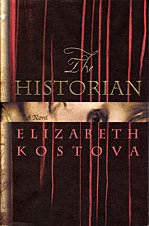
Book Review: The Historian by Elizabeth Kostova


Ever since the success of Dan Brown’s ‘Da Vinci Code’, the number of historical fiction novels in bookstores has increased dramatically. Everyone wants to do it now, hoping to become instant millionaires as well. And it wouldn’t be so annoying if it weren’t for the fact that, on a shelf with 14 titles, 10 of them would most likely be historical fiction, with the words ‘Better than ‘The Da Vinci Code!’ or ‘As good as The Da Vinci Code!’ emblazoned on the cover.

To start with, this novel doesn’t make any such claims on the front cover, which is just as well, because though it does touch historical avenues once in a while, it is nothing like ‘The Da Vinci Code’.

The novel is basically about a young teenage girl, whose father disappeared while searching for his mentor. Both her father and his mentor were historians, studying well, history, but more specifically the fact and fiction of ‘Vlad the Impaler’, or more widely known to this generation as ‘Dracula’. The girl then sets off with what she knows, hoping to track her father down.

The story is told in layers. It goes back and forth between two different stories- the story of the girl looking for her father, and the story her father told her about his time at university, when he was first introduced to his mentor and how he subsequently developed an interest in researching Dracula’s roots in history. Although this slows the story’s pace somewhat (to me I had to get at least a hundred pages in before it started getting exciting), to the patient reader, it is well worth the wait because once the book starts picking up the pace, it develops into a good thriller/horror story, keeping you turning the pages just to see what happens next.

Personally though, to me the only flaw in this book is its ending, which I find rather unsatisfying after the long buildup. But then that’s just a matter of perspective. I know other people who would disagree, and say that the ending was perfect. Either way, I found the book well worth the read. The language the author uses is not too complicated, and she keeps you guessing by leading us up to events which lead on to other events, and so forth.

Keep in mind, however, that all this excitement only happens AFTER the first hundred or so pages, so you're going to have to be really patient to enjoy this book. Stephen King fans would be used to this sort of treatment by now, so you should find this book okay, considering it's not just historical fiction, it's also relatively slow paced, but intricately detailed, and it delves into the horror genre as well every so often.

I still think the ending could have been better. More...tragic. But then I know some of you saps like endings where everyone's happy and dancing in the moonlight. So... there.

7 out of 10.

Sunday, April 30, 2006

Book Review: Republic of Trees by Sam Taylor


If any of you read my blog, you might be wondering what's been taking me so long to do this. After all, the cover is exciting enough, now you want to know whether the book itself is worth it or not.

To start off, the idea sounds innocent enough that I'll admit that I was fooled into buying it. This time I wasn't really fooled by the cover- I actually thought that I shouldn't judge it by its cover- the fact that the girl is topless there doesn't mean that the story is that dirty. Well I was wrong there. If I had judged the book by its cover, I would have known where I was headed.

But then I may never have read this book if that were the case, and that in itself is a loss as well.

It's true that this story is anything but innocent, but in a moment I'll get to why you should read this book.

Now, the innocent concept is about four young teenagers in the French countryside who run away to live in the forest and start their own noble community which they call the 'Republic of Trees'. Using Jean Jacque Rosseau's 'Social Contract' (don't pretend to be smart, please. Just click on that link and read it a bit, it'll do you a whole world of good) as a backbone, they start making up their rules, their way of living, and hey, everyone's happy. The main character Michael gets to climb trees. His brother and his best friend get to go hunting with a rifle. Isobel gets to go sunbathing. You get the idea.

But ah, the story isn't a whole load of roses. As I have said earlier, this book is anything but an innocent, fun read for those below twelve. Words like 'erection' do make their appearance in this book, and hey, big deal, right? The main characters are teens. They'd have to be castrated to not have any urges. But no, that's not really where the bulk of the story is. The bulk of the story really falls into place when a fifth character- Joy is introduced. While Joy seems to bring no harm to the way things work at first, seduction, love, jealousy...well things do fall apart. And in a bloody way. You'll have to read it to believe it.

There is a sort of dream-like quality to the way this story is told. Michael, the narrator won't remember all the details of everything that's happened, instead he picks out what he does and tells it to you, leaving you to assume to fill in the blanks. It adds a sense of realism to this story- in that seriously, if a story were narrated through a first-person POV, how the heck to those people remember every last detail? There is also a childish innocence to the way he narrates that you will feel ebb as the story progresses. And as things get ugly, well the dream turns into a nightmare.

The climax is a heartstopper, and the dark closing we're given ends this story in a way that tells you straight to your face: "IF YOU WERE LOOKING FOR ENID BLYTON, YOU GOT THE WRONG BOOK SUCKER!"

And that in itself is art, I'd say. The darkness of it all. This book is like William Golding's Lord of the Flies in a sense. The darkness of the human heart, portrayed in all its realism is what makes it all the more beautiful. If you don't mind being disturbed and having long periods of going, "Holy shit...they were kids. How could they..." then by all means, this book is the book for you.

I wouldn't say I loved every last moment of it. It's not that kind of book. But if you're looking for something that will leave a mark, then look no further. This will leave bloody footprints all over your mind. And again, the dream-like, self-righteous style of delivery makes this book all the more a frightening read.

A powerful debut from author Sam Taylor. I hope he keeps on writing, because really, there comes a time in life when you realize that you have way too much happy endings.

9 out of 10 because of its masterful delivery.

Book Review: Dark Cities Underground by Lisa Goldstein


Another Egyptian book. No wait, I haven't put much reviews up for the tons of others I've been getting into, so you guys won't really know what I'm talking about. Let's just say that I have a newfound obession with Egyptian mythology, and leave it at that. So looking at the cover, it should be pretty obvious why I picked it off the bookshelf. And the fact that it was only 6.00 bucks at PLB made the deal all the more sweeter.

Now, I highly doubt that Lisa Goldstein would be familiar to any one of you. Despite the fact that she's got quite a number of awards under her belt (I've been doing my research), she doesn't seem to surface much in mainstream fiction. Her genre is...how shall I put it? Different. As different as Khairul's music taste. Like 'The Streets' "Pyeow pyeow" to Britney's mainstream caterwauling. I know it's a subject of much debate right now on my blog, to which I shall admit defeat for now. But enough about that- now to the review.

Despite having Anubis on the front cover, the story isn't that heavily Egyptian. It greatly focuses on the central character Ruthie, a journalist who's trying to write a book on a boy, whose mother is a famous children's author. Word was that his mother got her insipration to write her fantasy books from stories that the boy told her as a child. (The boy is now in his 50s) It mostly revolves around this 'other world' to which the boy found the gate to underground, through a door he found in a great big tree.

Whoa. Stop. Alice in Wonderland-ish? Getting turned off by how childish this is starting to sound? Don't. There's more.

The idea for this book is really simple. Peter Pan (not the Indonesian band), Alice in Wonderland, The Wind in the Willows, The Hobbit, even. What if, all these authors got their inspiration from a particular place, if not directly themselves, then from people they knew who ended up there at one time or another? This place, this underground world that the boy mentioned above stumbled into, that goldmine for inspiration, is what this book revolves around.

Of course, there's much more to that underground world that talking mermaids, fairies and such. In fact, you'll find no such thing there. So how does it work, exactly? That's where I would be giving away too much. Because there are...say, other people interested in this place apart from the journalist author, who's just trying to write her book, and the boy, who's now trying to reconnect the events of his past. And not everyone has good intentions.

No romanticism in this novel. Unless you're looking for ickiness, considering the main male character is 50 and the woman is well, 40. Definitely not an outing for people looking for a good love story. But in a sense, sometimes books like these are fun to pick up if only to get away from the moaning and whimpering of lovebirds who you know are going to be kissing before the story ends.

The story develops itself at a suitably fast pace. By the end of the first chapter, you already know that great things are going to happen in this book, thus making it hard to put down, just because you want to understand what the heck is going on. It probably doesn't help that every once in a while, you're treated to a slight glimpse as to what the 'other parties' are doing.

So pick it up if the concept intrigues you. Either wait for me to come home or buy it from Borders, I'm quite sure I saw it there.

Of course, it won't cost 6 bucks if you buy it there. ^^

8 out of 10.

Thursday, March 23, 2006

Book Review: Norwegian Wood by Haruki Murakami

Image hosting by Photobucket


How often do I admit to liking something Japanese? How often do I admit to liking a romance novel? Never, right? Well here I am, about to do both of those things now. This book is damn good. No, really.

For those of you who don't know, 'Norwegian Wood' is the title of a Beatles song, and if you've heard it before, it almost echoes throughout the whole book, the melancholy tune and sentiment imbuing the work. The novel begins with a brief introductory chapter by Toru Watanabe, who upon hearing an orchestrial cover of the song, remembers his life about seventeen years ago, and the rest of the book retells those times. The murky ambiguity and confusion of The Beatles song is similar to the novel. It is a love story, or several love story. Baffling as love usually is. The Beatles sang: 'I once had a girl/or should I say/she once had me." Toru is similarly unclear as to how he should consider the relationships he is in.

There are two women involved. One is Naoko. In high school she was Toru's best (and only) friend's girlfriend, and the three of them got along really well. Then the best friend, Kizuki, committed suicide. Toru and Naoko didn't see each other for one year after the funeral. Toru wants to escape Kobe, where they grew up, and so he goes to a university in Tokyo. Here he runs into Naoko again who also goes to college here. They see each other on occasion, and make love once- after which she leaves Tokyo. Emotionally unstable, she returns to her family, and later on goes to live in a sort of sanitorium.

The second woman who Toru gets involved in is Midori, whom he meets after Naoko has left. She is in the same Drama class as him, and quite selfish and eccentric. Both Midori and Naoko are not entirely approachable. Both like, or even love Toru, but they are wary of having him close or revealing too much about themselves. Midori's father, who she says is in Uruguay is actually in the hospital. Toru accepts things as they are, and often tries to help but doesn't want to intrude on things. He is drawn to Midori, but feels an obligation to Naoko.

The story is told in an almost biographical style, which makes it feel all the more real because you feel like Toru is telling you his story. And the emotions, the way they are conveyed, the uncertainty surrounding them, they make this story feel all the more real. They make this story a lot more emotionally intense than your average love story.

Powerful in its delivery, and the reality that surrounds it.

8 out of 10. Minus two because it's from a Japanese author. XD

Friday, March 10, 2006

Book Review: Slaves of the Mastery

I've got a theory about trilogies; I call it The Second Book Theorem. Starting with His Dark Materials, I noticed that in most of the trilogies I've encountered, the second book in the trilogy, more often than not, is the best in the series. The Subtle Knife (His Dark Materials), Lirael (The Old Kingdom Trilogy), That-Second-Book-Whose-Title-I-Forget (The Elenium) and now, joining their ranks is Slaves of the Mastery, of The Wind On Fire Trilogy.

The first book sucked. Tanked. Majorly. It was a whole lot of bad from Badonia. There was almost no point in reading the first book. Hell, you can skip it and come out largely unscathed, plotwise. In fact, I recommend you to completely ignore the first book. It's nothing compared to this one.

This book? Oh, it's just one of the best fantasy books in a trilogy that I've read in a while, right behind Lirael and The Subtle Knife. The characters are again one of the strongest points in this book, but this time, add a compelling plot and wonderful pacing to that list.

I don't really like divulging details about the plot but...

Well, Aramanth, released from the grip of the Morah, becomes kinder - weaker. The city had let its guard down and its defences were few. Then came the Mastery and its army, marching in to annihilate Aramanth and enslave its people. This they did, burning the city to the grounds and the Hath family were all captured, save for Kestrel, who had been hiding in the city and somehow got away. Now, she will have to find her family again and set them free...

Well, there's more to it than that, and you see Bowman, along with Mumpo, develop further, growing wiser/stronger. Also, the introduction of Sisi, the Johdilla, adds more depth (even if she herself lacks it) and color (now this she has a lot of) to the proceedings.

It's wonderful how everything gets together so well in this book and I was actually amazed that the author had this in him, considering the H-U-G-E disappointment that was The Wind Singer. All in all, reading this was a pleasure and I expect most of you will feel the same.

I give this an 8 out of 10.