Sunday, April 30, 2006

Book Review: Republic of Trees by Sam Taylor


If any of you read my blog, you might be wondering what's been taking me so long to do this. After all, the cover is exciting enough, now you want to know whether the book itself is worth it or not.

To start off, the idea sounds innocent enough that I'll admit that I was fooled into buying it. This time I wasn't really fooled by the cover- I actually thought that I shouldn't judge it by its cover- the fact that the girl is topless there doesn't mean that the story is that dirty. Well I was wrong there. If I had judged the book by its cover, I would have known where I was headed.

But then I may never have read this book if that were the case, and that in itself is a loss as well.

It's true that this story is anything but innocent, but in a moment I'll get to why you should read this book.

Now, the innocent concept is about four young teenagers in the French countryside who run away to live in the forest and start their own noble community which they call the 'Republic of Trees'. Using Jean Jacque Rosseau's 'Social Contract' (don't pretend to be smart, please. Just click on that link and read it a bit, it'll do you a whole world of good) as a backbone, they start making up their rules, their way of living, and hey, everyone's happy. The main character Michael gets to climb trees. His brother and his best friend get to go hunting with a rifle. Isobel gets to go sunbathing. You get the idea.

But ah, the story isn't a whole load of roses. As I have said earlier, this book is anything but an innocent, fun read for those below twelve. Words like 'erection' do make their appearance in this book, and hey, big deal, right? The main characters are teens. They'd have to be castrated to not have any urges. But no, that's not really where the bulk of the story is. The bulk of the story really falls into place when a fifth character- Joy is introduced. While Joy seems to bring no harm to the way things work at first, seduction, love, jealousy...well things do fall apart. And in a bloody way. You'll have to read it to believe it.

There is a sort of dream-like quality to the way this story is told. Michael, the narrator won't remember all the details of everything that's happened, instead he picks out what he does and tells it to you, leaving you to assume to fill in the blanks. It adds a sense of realism to this story- in that seriously, if a story were narrated through a first-person POV, how the heck to those people remember every last detail? There is also a childish innocence to the way he narrates that you will feel ebb as the story progresses. And as things get ugly, well the dream turns into a nightmare.

The climax is a heartstopper, and the dark closing we're given ends this story in a way that tells you straight to your face: "IF YOU WERE LOOKING FOR ENID BLYTON, YOU GOT THE WRONG BOOK SUCKER!"

And that in itself is art, I'd say. The darkness of it all. This book is like William Golding's Lord of the Flies in a sense. The darkness of the human heart, portrayed in all its realism is what makes it all the more beautiful. If you don't mind being disturbed and having long periods of going, "Holy shit...they were kids. How could they..." then by all means, this book is the book for you.

I wouldn't say I loved every last moment of it. It's not that kind of book. But if you're looking for something that will leave a mark, then look no further. This will leave bloody footprints all over your mind. And again, the dream-like, self-righteous style of delivery makes this book all the more a frightening read.

A powerful debut from author Sam Taylor. I hope he keeps on writing, because really, there comes a time in life when you realize that you have way too much happy endings.

9 out of 10 because of its masterful delivery.

Book Review: Dark Cities Underground by Lisa Goldstein


Another Egyptian book. No wait, I haven't put much reviews up for the tons of others I've been getting into, so you guys won't really know what I'm talking about. Let's just say that I have a newfound obession with Egyptian mythology, and leave it at that. So looking at the cover, it should be pretty obvious why I picked it off the bookshelf. And the fact that it was only 6.00 bucks at PLB made the deal all the more sweeter.

Now, I highly doubt that Lisa Goldstein would be familiar to any one of you. Despite the fact that she's got quite a number of awards under her belt (I've been doing my research), she doesn't seem to surface much in mainstream fiction. Her genre is...how shall I put it? Different. As different as Khairul's music taste. Like 'The Streets' "Pyeow pyeow" to Britney's mainstream caterwauling. I know it's a subject of much debate right now on my blog, to which I shall admit defeat for now. But enough about that- now to the review.

Despite having Anubis on the front cover, the story isn't that heavily Egyptian. It greatly focuses on the central character Ruthie, a journalist who's trying to write a book on a boy, whose mother is a famous children's author. Word was that his mother got her insipration to write her fantasy books from stories that the boy told her as a child. (The boy is now in his 50s) It mostly revolves around this 'other world' to which the boy found the gate to underground, through a door he found in a great big tree.

Whoa. Stop. Alice in Wonderland-ish? Getting turned off by how childish this is starting to sound? Don't. There's more.

The idea for this book is really simple. Peter Pan (not the Indonesian band), Alice in Wonderland, The Wind in the Willows, The Hobbit, even. What if, all these authors got their inspiration from a particular place, if not directly themselves, then from people they knew who ended up there at one time or another? This place, this underground world that the boy mentioned above stumbled into, that goldmine for inspiration, is what this book revolves around.

Of course, there's much more to that underground world that talking mermaids, fairies and such. In fact, you'll find no such thing there. So how does it work, exactly? That's where I would be giving away too much. Because there are...say, other people interested in this place apart from the journalist author, who's just trying to write her book, and the boy, who's now trying to reconnect the events of his past. And not everyone has good intentions.

No romanticism in this novel. Unless you're looking for ickiness, considering the main male character is 50 and the woman is well, 40. Definitely not an outing for people looking for a good love story. But in a sense, sometimes books like these are fun to pick up if only to get away from the moaning and whimpering of lovebirds who you know are going to be kissing before the story ends.

The story develops itself at a suitably fast pace. By the end of the first chapter, you already know that great things are going to happen in this book, thus making it hard to put down, just because you want to understand what the heck is going on. It probably doesn't help that every once in a while, you're treated to a slight glimpse as to what the 'other parties' are doing.

So pick it up if the concept intrigues you. Either wait for me to come home or buy it from Borders, I'm quite sure I saw it there.

Of course, it won't cost 6 bucks if you buy it there. ^^

8 out of 10.

Thursday, March 23, 2006

Book Review: Norwegian Wood by Haruki Murakami

Image hosting by Photobucket


How often do I admit to liking something Japanese? How often do I admit to liking a romance novel? Never, right? Well here I am, about to do both of those things now. This book is damn good. No, really.

For those of you who don't know, 'Norwegian Wood' is the title of a Beatles song, and if you've heard it before, it almost echoes throughout the whole book, the melancholy tune and sentiment imbuing the work. The novel begins with a brief introductory chapter by Toru Watanabe, who upon hearing an orchestrial cover of the song, remembers his life about seventeen years ago, and the rest of the book retells those times. The murky ambiguity and confusion of The Beatles song is similar to the novel. It is a love story, or several love story. Baffling as love usually is. The Beatles sang: 'I once had a girl/or should I say/she once had me." Toru is similarly unclear as to how he should consider the relationships he is in.

There are two women involved. One is Naoko. In high school she was Toru's best (and only) friend's girlfriend, and the three of them got along really well. Then the best friend, Kizuki, committed suicide. Toru and Naoko didn't see each other for one year after the funeral. Toru wants to escape Kobe, where they grew up, and so he goes to a university in Tokyo. Here he runs into Naoko again who also goes to college here. They see each other on occasion, and make love once- after which she leaves Tokyo. Emotionally unstable, she returns to her family, and later on goes to live in a sort of sanitorium.

The second woman who Toru gets involved in is Midori, whom he meets after Naoko has left. She is in the same Drama class as him, and quite selfish and eccentric. Both Midori and Naoko are not entirely approachable. Both like, or even love Toru, but they are wary of having him close or revealing too much about themselves. Midori's father, who she says is in Uruguay is actually in the hospital. Toru accepts things as they are, and often tries to help but doesn't want to intrude on things. He is drawn to Midori, but feels an obligation to Naoko.

The story is told in an almost biographical style, which makes it feel all the more real because you feel like Toru is telling you his story. And the emotions, the way they are conveyed, the uncertainty surrounding them, they make this story feel all the more real. They make this story a lot more emotionally intense than your average love story.

Powerful in its delivery, and the reality that surrounds it.

8 out of 10. Minus two because it's from a Japanese author. XD

Friday, March 10, 2006

Book Review: Slaves of the Mastery

I've got a theory about trilogies; I call it The Second Book Theorem. Starting with His Dark Materials, I noticed that in most of the trilogies I've encountered, the second book in the trilogy, more often than not, is the best in the series. The Subtle Knife (His Dark Materials), Lirael (The Old Kingdom Trilogy), That-Second-Book-Whose-Title-I-Forget (The Elenium) and now, joining their ranks is Slaves of the Mastery, of The Wind On Fire Trilogy.

The first book sucked. Tanked. Majorly. It was a whole lot of bad from Badonia. There was almost no point in reading the first book. Hell, you can skip it and come out largely unscathed, plotwise. In fact, I recommend you to completely ignore the first book. It's nothing compared to this one.

This book? Oh, it's just one of the best fantasy books in a trilogy that I've read in a while, right behind Lirael and The Subtle Knife. The characters are again one of the strongest points in this book, but this time, add a compelling plot and wonderful pacing to that list.

I don't really like divulging details about the plot but...

Well, Aramanth, released from the grip of the Morah, becomes kinder - weaker. The city had let its guard down and its defences were few. Then came the Mastery and its army, marching in to annihilate Aramanth and enslave its people. This they did, burning the city to the grounds and the Hath family were all captured, save for Kestrel, who had been hiding in the city and somehow got away. Now, she will have to find her family again and set them free...

Well, there's more to it than that, and you see Bowman, along with Mumpo, develop further, growing wiser/stronger. Also, the introduction of Sisi, the Johdilla, adds more depth (even if she herself lacks it) and color (now this she has a lot of) to the proceedings.

It's wonderful how everything gets together so well in this book and I was actually amazed that the author had this in him, considering the H-U-G-E disappointment that was The Wind Singer. All in all, reading this was a pleasure and I expect most of you will feel the same.

I give this an 8 out of 10.

Book Review: The Wind Singer

This is the first book in a trilogy that chronicles the lives and adventures of a trio of children belonging to a tribe of people called the Manths. These people live in a city called Aramanth where exams are everything. Failure to pass an exam carries with it a heavy sentence of being demoted of your privileges, should you acquire them. It's all terribly depressing, and deeply unfair, as Kestrel points out rather er, subtly in the town square.

Ultimately, her defiance to the system led her to carry the responsibility of loosening the grip an evil entity called the Morah on the city. She has to go on a journey unlike any other, endure the deserts and "walk through the fire" to gain the Singer's Voice, or whatever it was called. Then, and only then will her people be free, hence enabling them to "seek the homeland".

Needless to say, this is all boring. I read through the book with a half-heart, not really wanting to know what happens next. One of the few things that made me read on was Kestrel's relationship to her twin brother, Bowman - their love for each other, although somewhat well, nauseating, was real. Also, their father's attempt at a quiet mutiny by convincing his fellow "failures" to do their best at what they know, as opposed to attempting to be an all-rounder.

All right, Whatever. By the end of the book I felt slightly cheated, even if I grew to love the Hath family, Kestrel and Bowman, especially. That's the only saving grace for this book: the characters. The plot and everything else just felt half-baked.

Pick this one up at your own risk.

4 out of 10

Saturday, February 18, 2006

Book Review: Princess by Jean P. Sasson


Bet none of you saw THIS coming, did you? It's an autobiography of a woman living in Saudi Arabia. Try to imagine that if you will. Me. Saudi Arabia. Woman. Autobiography. Autobiography. Me. Well, I did say I was going to try and diversify when it came to reading, and Nadia gave me a hand (thanks, love) by passing me this book, along with two others: Tuesdays with Morrie (awesome, awesome book), and A Child Called It. All three are autobiographies.

Right, now the name itself brings an image of a rich, beautiful girl, covered in diamonds and rubies, living in the lap of luxury, getting everything she wants when she wants it. If that image is what you have in mind, then it's going to be shot down to hell once you open the book. What follows is a riveting story of oppression, oh how women are treated in Saudi Arabia. They have to real rights, no say in anything, and are viewed only as things used for breeding with and sexual pleasure. In a family, sons are treasured, daughters are reviled, for fear that they might 'sully the family name'. Since birth, women are taught to be obedient to men, and men are taught to be stuck up, arrogant pricks who abuse them.

The story follows the life of Sultana, from her childhood days till her marriage, of all the trials and tribulations she has to go through as she dreams for a change in her world- one that will permit her to achieve her other dreams, for indeed, in Saudi Arabia, women have no right to achieve anything they want. From the way the story is told, (especially if you're a girl), prepare to spend a lot of time snarling and growling, and feeling sorry for, not this woman in particular, but the entire female population of Saudi Arabia. To describe some of the things they have to go through here would not do the book justice, so I'll leave it to you to read for yourself. You'll be surprised as to how harsh and extreme things are in these book, considering the fact that Arabs tend to generate the 'holier-than-thou' image on us Muslims.

The language is simple and clear. Using the first-person narrative, the author draws us into the main character's shoes in such an effective manner that you will feel as though you are the person, and, to an extent, wish that someone would sweep in there with a plane, rescue all the women, then drop a nuclear bomb on the remaining men. The story doesn't end as the book finishes- as it sets the stage for two sequels (which I hope to be reading really soon). It ends in a mournful, sad yet hopeful note. Which is, something that I'm thankful for. The way I see it, autobiographies are meant to end sadly. (part of the reason why I hated the Memoirs of a Geisha movie)

Rivetting and a page-turner. Despite what I expected it to be, it turned out to be a book that I will always remember.

8.5 out of 10.

Saturday, February 11, 2006

Book Review: The Wrong Boy by Willy Russell


Holy crap. Nicholas Pang, I will not doubt any book you throw my way anymore. NEVER. In fact, I'm finally opening that Haruki Murakami book right now. Yes, finally. Shouldn't have doubted your choices, never will again. ^^ Because this book just blew me away.

Now, I expected something Adrian Mole-ish from this book. The lead character is after all, a British teenager who narrates the story through letters he writes to his favorite singer (not a diary, but it almost passes of a kind of diary. Unique, really) And its almost a coming-of-age novel, teen angst and it is humorous at times, because of the way it's narrated early on. But this book is really much, much, more mature, with more heart-wrenching scenes and darkness in it that it's a lot more than I really expected it to be.

The basic premise of this book is about a boy, Raymond Marks whose life changes when he gets accused of being...well, *something* by the local community due to a slight misunderstanding, and his fucked-up Headmaster. From then on life spirals downwards for him and his single mom, as he (eleven as this is happening) is sort of ostracized from society and the people who were once his friends. This however, is told in a more past tense form as the story really unfolds as he is leaving home, headed to a place called Grimsby where he is going to work as a construction worker. The events of the past he tells to his favorite singer Morissey, through his letters, piece together his past and eventually lead to where he is now.

The story is purely a roller coaster ride of emotions. There are characters you will hate with such intensity, and then there are ones you'll love and cry for, the main character included. And despite being a novel with a teenager as the main character, only the last 40 or so pages are dedicated to any form of romance, which is also left without being developed because frankly, this story isn't about this boy's love life, it's about his growing up, and the challenges he face due to being 'less than normal', due to being 'the wrong boy' as he sees it.

I shed tears more than once while reading this book. And seriously, I haven't been moved this much for a long time now, not since- oh well, I'd rather not bring it up, but it's a really really good book- one that I plan to own when I get home. Cuz I have to return this to the library in a few days- so later I'm going to look for one at Borders or Kino and buy it. It's that damn good.

Something about the main character reminds me of Khairul though- how he adores that one singer that no one else he knows seems to appreciate, and yet he fiercely defends that-

Oh wait, Khairul doesn't defend Chris Martin anymore.

But I digress.

I give this book a perfect score, and it fully deserves it.

Saturday, January 21, 2006

Book Review: A Mango-Shaped Space

I found this book in the Young Adult section accidentally, just combing through the list of titles. The book's size was a little bigger than the rest on its shelf (and it was the only one there) so I took it out and...

...IT HAS A PRETTY COVER! OOOH!

Seriously though, I picked this up only because I can get a 25% discount on The Time Traveller's Wife and only on an impulse.

It was a good decision, in retrospect.

The book details the life of Mia ...or the adolescent part of it, anyway. Mia is a normal middle-child who has a bitch as a sister and a weirdo of a little brother; so what's new?

Well, for starters, she can see colors when no one can.

You see, for Mia, letters and numbers and sounds, they all have colors for her. For example, the mew of her cat, Mango, has the color of, well, mango. (Hence the name.) To her, this is normal but when her parents find out, they collectively freak out.

--------------------------------

Mia's Mom: I told you not to take drugs!
Mia's Dad: What drugs? My cousin was the one who took drugs! And how is that relevante here?
Mia: (exasperated silence)

--------------------------------

Mia's parents, like all parents would after finding out their daughters are seeing things they're not, thought she was nuts. She's not. Quite simply, she has a condition that is not harmful nor is it a disability.

She has synasthesia.

After that discovery, the book primarily deals with coming to terms with Mia's condition. Mia accepting it with joy; her family supporting her and her best friend...

...ah, yes. Mia gets into a fight with her best friend. It's interesting how it plays out but the potential is lost near the end. But it's pretty good.

Also, as with any typical teen story, there has to be a tinge of romance. It's not sappy and it has an almost clinical outlook on it. But well, by this time, you can already guesss what will happen.

All in all, it's a good book, if slightly flawed. Give it a shot but don't expect too much out of it.

7 out of 10

Friday, January 20, 2006

Book Review: The Thief of Always by Clive Barker


Wikipedia. Horror. Link. HP Lovecraft. Link. Clive Barker. And I get this. It's going to be made a movie. (Yes, I know, ANOTHER movie tie-in) pretty soon, so upon running into it at Pay Less Books, I decided that I'd get a peek at it before the movie comes out. It was described as a children's book, but a horror book at the same time. So it intrigued me. THIS is what I should have been reading during my days as a kid. THIS is the bedtime story I want to tell my children (If I ever get married. Hm. Nah) Because hey, it's a children's story. It's like 'Charlie and the Chocolate Factory.... Of Doom'.

Like most children's books, this book features children who get whisked off to magical faraway places, or just places that are plain bizzarre where they see things from their wildest dreams. The main character, Harvey Swick is sent to the Holiday House, a place that every child would want to go. There its always spring in the morning, summer in the afternoon, Halloween in the evening (Autumn) and Christmas at night (winter). Oh yay, joy. In an Enid Blyton book, the children will have fun, then go home, and live happily ever after, just that they miss the place.

But then Enid Blyton had no hand at all in this.

The children aren't allowed to leave, and the Holiday House seems to have secrets of the demonic kind. Will Harvey Swick be able to get out alive?

What I love about this book is its disturbing underlaying tones which might not seem too apparent to the average child, but oh yes, its there. And the bad guys don't explode into rainbows and candy. It's got darkness which it doesn't try too desperately to hide. And unlike a certain other book about a certain factory of chocolates, the bizarreness of this book doesn't feel all that childish. Sure there are transformations and stuff. But no one gets turned into a giant blueberry. And the tour-guide isn't a Depp-turned-into-Michael-Jackson.

Extra points for that.

Granted, I haven't read Chocolate Factory, but the movie just made it so much less appealing to me, that I don't think I ever will.

Good thing I picked this up before the movie, then.

I give it a 7 out of 10.

Book Review: The Anubis Gates by Tim Powers


Early holidays. My reading list was still thick and I was still on a no-buying policy when it came to books. Then one day dad went to Borders. ^^ And then I found this.

You won't find a proper synopsis at the back of the book, but I took a chance. This is what was promised at the back: a wide range of characters stuck in royally messed up situations. These include a literature analyst, a sorcerer, a hideously deformed clown, a body-switching werewolf, a girl dressed up as a guy, and a brainwashed British lord who is also a poet. Oh, and did I mention that this book involves time travel?

Apparently word goes around that as far as time-travel related novels go, this one is one of the best And after reading it, I can see why. It has the sense of wit, adventure, and a large array of things that don't make sense, but come together just cleanly at the end, leaving you going 'Oh!' Not in an errotic sense >< I think too much. So anyway, the main character, the literature guy is offered a chance to go back in time to see this poet he's researching for his book, in exchange for him briefing and explaining the situation to a bunch of other rich guys who are paying his benefactor to go back and witness the event. They arrive, they witness the event, but just as the others are leaving, the main character gets left behind in 18th century England with no money, no connections, and no place to go.

And then there's the fact that some Egyptian guy seems intent on learning the secret of time travel from him, which he knows nothing of- not that the Egyptian guy cares. It's all in the torturing anyway. So yeah, one royally messed up situation leading to another, there's rarely a dull moment in this book. It's like a kind of adventure that Indiana Jones would kill to be a part of.

The romance isn't so well developed as the other parts of the book, but hey, who cares? (Not me, that's for sure). Keep me excited and up till wee hours of the morning, turning pages and I'm happy. More than happy, even. I'm hooked. I used to only take interest in Greecian and Roman deities, but lately I've been checking up on Ancient Egyptian culture too. ^^ Woot!

Ah, and for anyone interested in writing scenes involving sword-fights, pay close attention: The final scene of this book pulls off a very good sword fight, which isn't draggy nor is it dull. And just whoa, I'll say it's one of the best face-offs I've read in a book.

I won't rant more. I'll just say it's good, and leave it here with 9 out of 10.

Book Review: Abhorsen by Garth Nix


The concluding chapter in the Old Kingdom Trilogy (which I still insist should be a duology) It picks up where Lirael left off. It doesn't feel like an all new story altogether, because it's not meant to be. It's meant to tie up the story and that's what it does. Nothing more. Nothing less. This book is satisfying enough, in the sense that it maintains the same things that made Lirael good, and threw in more tight situations, and higher stakes. The story itself starts with the main character trapped on an island with the enemies preparing to make their move. And it only gets more and more intense.

Abhorsen is a roller coaster ride. Where Lirael and Sabriel had time to try and bring out the world in the back of your mind, Abhorsen has you rushing along from one place to another as the characters try to save it. The characters develop a lot more here from this point onwards, partially because they have no choice, partially because of the situations they've come out from in 'Lirael' and partially because of the revelations made at the end of that book. (I'm not giving anything away). Character dynamics are better in this book, as far as I'm concerned. But as it serves only as a conclusion, there's not much else I can say about this book.

There is an underlying 'coming-of-age' and 'accepting what you are' kind of theme running overall in this one. And it wraps up with a tragedy or two, which is always good, or it would have ended up too rosy. But it is at that final tragedy that you realize how much the character Lirael has grown. And you'll appreciate this book all the more for it.

I heard that there's a sequel for this. That short, small, purple book. I'm not picking it up, if only because I feel like this was a good fullstop. Too much dragging of a good thing makes it annoying.
*cough*starwarsprequels*cough*

7 out of 10 for this book.

8.5 out of 10 for the last two books, or if Lirael and Abhorsen had just been joined into one.

For the entire trilogy (which unfortunately includes Sabriel), I'll give it a 6. So for everyone's sake, let's pretend 'Sabriel' doesn't exist.

Book Review: Lirael by Garth Nix


Odd how I should be getting to this before Khairul, considering that the trilogy was his discovery.
And after how I attacked the last book, you might find it funny that I originally wanted to decide between 'Sabriel' and 'East' while I was shopping with Khairul at Kinokuniya- to which when I asked for his opinion, he asked me to choose 'East', and I rather reluctantly did so. Part of me was screaming that 'Sabriel' was better. Why else would it have a fancier cover? Why else would there be so many copies in Kinokuniya? Well, needless to say I don't regret picking 'East' one bit. But it's funny how Khairul came back later to pick up 'Sabriel'. I'd almost forgotten about it because of 'East'.

Right, in this book, Garth Nix is finally getting somewhere. I say this because most of the holes in Sabriel were filled in this one (most, not all). And in the grand scheme of things, eventually you'll realise that 'Oh, THIS is the main character of the trilogy, NOT Sabriel.' And then you'll sigh with relief. Because 'Lirael' is so much more interesting. (Both the book 'Lirael' and the character 'Lirael'.) Unlike Sabriel, she isn't born to a 'wonderful sacred duty/destiny', so you can feel the contrast there. Far from in, in fact. Lirael is a suicidal girl who was drawn and detailed with quirks, a missing past, guilt, resilience, and a sense of wanting to belong. Sabriel was a hero, who had a sacred duty... and she did it. End of story. Now, Lirael weaves a more tangled web than Sabriel, and that makes it so much better.

The story starts years after Sabriel, introducing us to Lirael. She's a completely different character than Sabriel, as she doesn't start out as an Abhorsen or a necromancer. She is meant to be a Clayr, a Seer. Only her powers haven't developed yet, which causes her to feel like she doesn't belong. Hence the suicidal tendecies. She's a very depressed girl. Though I admit that strong commanding characters like Sabriel turn me on more, Sabriel didn't have enough behind her to make her feel real, while Lirael does. Add a missing past to Lirael's life (she has never met her mother, which leads her to doubt that she has inherited any Clayr blood at all), and you've got a character that you actually want to turn pages for.

In terms of her journey, it feels better because what the villains are actually attempting to do are not exactly clear, with a complicated web drawing it different, unique people- from Sabriel's son Sameth, to the scientific Nicholas who has something inside of him, to the companions of Lirael and Sameth, respectively The Disreputable Dog and Mogget. Yes, a talking dog AND a talking cat. Throughout the story, Dog and Mogget drop hints that there's a lot more going on then we're being led on to, which makes the story feel a lot less linear and more complicated than the first book.

There are more twists in this one. More intense scenes. Even the world feels a bit more alive now.

If anything though, the villains still feel traditional. But they're still a lot better than the one in Sabriel, which, by the time you finish this book, you'll realize that the book 'Sabriel', in the grand scheme of things, was a waste of time.

9 out of 10. It's well worth a read.

Book Review: Sabriel by Garth Nix


The first book in the Old Kingdom trilogy. Yes I've finally gotten round to reading the whole thing, regardless of the fact that it was originally quite far down my reading list. Nicholas borrowed it from me, and another guy subsequently borrowed it from him, and I the other guy told me that it was worth the time. It convinced me that maybe there was something exceptional about this book after all, now that Khairul wasn't the only person who was telling me 'Sabriel is good!'.

As Khairul has mentioned in his review, the story opens with the birth of the main character, then immediately jumps to a point in her life where she's about to embark on her journey to save her dad (who happens to be a necromancer. Lots of dead things mentioned in this book), which leads her from one thing to another. The world is drawn nicely, though there wasn't so much emphasis on descriptions. This was both a good thing and a bad thing, in my opinion. Good because the descriptions didn't bore me and drag too long, just enough to get me interested in the world, bad because it got me interested, but didn't care enough to satisfy my curiosity. The world in this book is attention-grabbing enough, but in the end it left me feeling that there was a lot more to it than the author was going on about.

For the storyline, it felt quite linear to me. But maybe that's because I've just read one too many fantasy novels. Though I like journeys, and there was a plus point that the setting was a cold place, and the end of it all. it feels like going somewhere, oh, go somewhere else, oh, go somewhere else, fight the bad guy, end. There was a total of one twist throughout the story which was of any significance, as far as I was concerned, but it felt quite lame in the grand scheme of things, which ended up with me not liking the main couple so much. The characters are alive, but like the world they are alive enough to warrant wanting to find out more- something you'll never get. If there was a character that I felt satisfied with, it was Mogget, the talking cat. Sarcastic and mean, he adds life to the story which the other two characters- Sabriel and Touchstone lacked in one way or another.

It didn't help that the bad guy was just the bad guy and nothing more. I expected a lot more character dynamics, and that left me feeling a tad bit disappointed.

On the whole scale though, its adequate for a fantasy story. Though it introduces a few new concepts, the delivery of it felt rushed and the characters weren't as endearing as they could have been. But apart from that, it should be alright, especially if you're new to this genre. Otherwise you'll feel like it could have been so much more.

6 out of 10. At least it's not 'The Light Ages'. (pukes)

Friday, November 11, 2005

Book Review: Spirit-Walker


I know what you're thinking: 'Ooooh! Pretty cover!' Or is it just me? Anyway, I guess there was some good in picking up Wolf Brother late, because apparently, here the sequel is! And to add to the happiness- it's in hardcover, and I NEVER buy books in hardcover unless they're from PLB. The reasons why I bought this particular one in hardcover are 1) It's pretty, 2)It was the birthday present from mom, and 3) for a hardcover book, it's pretty darn cheap- 50 bucks. Normal hardcover books have a tendency to go to 60 and 70.

Oh well, money matters aside, let's get down to the book itself. Now, Spirit-Walker takes off a few seasons after the end of Wolf Brother. Torak's been spending time with the Ravens, and far off somewhere else, Wolf has grown up. Needless to say, they still think about each other. If you were hoping for a reunion, then rejoice. If you were not hoping for a reunion because it would somehow cheapen the goodbye from Wolf Brother, don't worry so much about it- the reunion doesn't happen on page one. It happens quite late into the story anyway. The entire story is being told through the perspectives of three characters: Torak, Wolf, and Renn (yes, she's back).
So, after dispatching the demon-bear in Wolf Brother and having learnt a few important bits about his past, in this book Torak is going to have to dispatch yet another demon. Not a physical one this time- it's a sickness that has been spreading around the forest, causing people and animals to go mad. Suspecting that the whole thing ties to him and what he really is (no, he doesn't know yet. Fin-Kedinn told him), he sets off on a journey to find the cure, which takes him beyond the forest this time- to the sea.

Once again Paver pulls off her magic of drawing you into her world. With a new major setting, she introduces new concepts, new aspects of the living world she introduced to you in the first book, without being too repetitive. And it remains every bit as believeable as the first. Well, not counting one or two bits. And it's every bit as captivating- her ability to keep you turning pages hasn't deteriorated (yet. give her a couple more billion dollars and the ability to write up to book Five, and then we'll see), and at the end of the day, if you enjoyed the first one, you will love this one. The descriptions of the way people lived, their beliefs, its all here.

If there are any flaws, then I'd say that it still feels a bit rushed, though not as rushed as Wolf Brother. So that's at least an improvement. The storyline is constructed well enough, but there are a few things that might be a bit predictable. Apart from that, the revelation at the ending didn't feel explosive enough, even if Paver might have inteded for it to be that way.

All in all, a good read.

9 out of 10. Keep em' coming Ms Paver!

(Soul Eater, the next book comes out in 2006)

Friday, October 21, 2005

Book Review: The Tribes of Palos Verdes


Now here's a book that, until Feera lent it to me, was nowhere on my radar. She lent it to me quite recently, but I read it almost immediately after I put The Belgariad down. No wait, not almost. I read it immediately ><. Syat and Khairul, don't hold it against me for not reading YOUR books instantly- yours are thicker. This book is thin. So I decided to get it over and done with quickly.

And words can't express how glad I am that I decided to read it quickly. It's good. Seriously. The story revolves around a girl, Medina, and her twin brother Jim who live in Palos Verdes, California. It's a modern setting. No, it's not a fantasy book. It leans more towards Young Adult, though it arguably stands on a higher ground in terms of maturity. At first glance, it seems like another adolescent's account of growing up, of coming-of-age, but beneath that, what it really is is a subtle account of a family breakdown.

And that's where it becomes real. Medina's life is far from perfect to begin with. Her breasts are small (this fact is highlighted quite often), 'plastic girls' at high school stop to make fun of her every so often, she doesn't have much friends other than her brother, no, slash that, she hardly has ANY friends other than her brother, and to top it all off, her parents' marriage is disintegrating. To keep her mind off her troubles, Medina resorts to surfing at the beach right outside her house, taking up the challenge of bigger and bigger waves. Taking up bigger and bigger risks.

Meanwhile, her relationship with her brother starts falling apart as her brother sides with her resentful mother when the marriage falls apart. Her mother doesn't make it any easier for her either- to put it frankly, her mother's a bitch. She seems to blame Medina for everything now that her husband is out of the house, making Medina's life even more miserable. Medina doesn't really have anyone to turn to- her father left the house and she is, as far as she is concerned, not welcome to his new life yet. And so she endures living at home with her mother and Jim, who seems to drift further and further away everyday.

This story is told as simply as it would be told to a diary or a passerby, but the emotions felt are slotted between the lines. Symbolism is used to great effect in the story, which increases it's impact on the reader. It takes the reader down dark roads- houses with broken marriages, smoking pot, and the real extent of how hostile people can be to you in school if you're not 'popular enough'.

At the end of it all, it's a very powerful book which will get you thinking of a lot of things. And I'm not talking about the surfing. About life, your parents, and your siblings. Honestly said this is the first book to get me this emotionally swept up in a long while. Reading about Jim and Medina reminded me of my sister to some extent, and how close we used to be before boarding school. That, and how I still silently vow to murder any boy who breaks her heart.

I want a copy of this book for myself. I wager Feera won't part with it for any amount of money, so I guess it's time to hit the Kino Navi.

9 out of 10.

Book Review: The Belgariad-Volume


All powerful thingamabob, bad guys want it- oh wait, I've done this before. So there's really no need to tell you that as far as fantasy goes, The Belgariad doesn't really break any new ground. Or maybe, back when it was first published, this area was still considered new because Tolkien had probably only used it once. Don't get me wrong, I'm not saying that this book series sucks. In fact I gave it 7.5 for the last volume, and this one is going to get a higher score. It's good. Just not exceptional if you're only starting to read it after touching all other sorts of fantasy series. Because honestly, how many more stories do we need about all-powerful thingamabobs?

On to business now. The previous volume stopped at book three out of the full series (Which has a total of five books). So maybe that's where the groundbreaking factor is: Who needs trilogies when you can do quintologies? HAHA! I'm not even sure if I used the proper word, so I'll move on. Anyway, the first volume ended with the good guys getting a hold over the all powerful thingamabob I talked about last time. So the final volume focuses on 1)fleeing back to their own country with the thingamabob intact and 2) going on an all out war with the bad guys with the odds against them (aren't they always?). What adds uniqueness to this story is that, at this point it is told by following the two main characters- The starry-eyed Garrion and his reluctant bride-to-be, Princess Ce'Nedra. (don't ask me how to pronounce that) Garrion's story focuses on him getting used to the throne, and, subsequently, learning of the prophecy on how he must kill the Evil God that the bad guys worship with his flaming sword of doom! Okay, so it's not called the flaming sword of doom... I'm beginning to sound like Shahril ><. The Orb apparently was meant to be attached to a sword, to create Garrion's ultimate weapon. It does fulfill requirements for being an ultimate weapon- considering they had to beat a powerful boss at the end of Volume One to obtain it, says the laws of videogames. So, with his sword, he can now fulfill the prophecy, which says he must fight Torak, the Evil God. Catch now is that there are TWO prophecies. One that belongs to the good guys, and another that belongs to the bad guys. Respectively, the good guys say that they will win, and the bad guys say that they will win. Even though it is as clear as the light of day to the reader which prophecy in the end, will be the true one, it is not to the characters in the story, and so Garrion, though fearing for his life, marches forth with Belgarath the sorcerer (think Gandalf) and Silk (my favourite character, sarcastic thief/spy) to confront Torak, hoping that if he can kill off the God quickly, he will avert the need for a war which will cause the deaths of, well, a lot of people.

Don't worry, the war isn't averted. In fact, it is used as a diversion by Princess Ce'Nedra to ensure her husband-to-be gets across the borders safely. No wait, that doesn't sound very humane, does it? Bah. Anyway, the parts of the book that don't involve Garrion involve Ce'Nedra developing from the spoilt princess into army leader, delivering speeches to rouse armies and making deals with kingdoms, etc. etc. Basically it involves her growing up, and what the other characters involved in the war have to do. At this point it gets a bit confusing, considering that there are, in my opinion, way too much characters to follow. But it doesn't in any way destroy the finer points of this book- which as in the last volume, was the livid description of the world. Yes, I would say that that is David Eddings' best aspect. Countries have actual borders, customs, food, you get the picture. The world is almost as alive as if it were real. And you want to get to know it all the more.

What is obvious, though I don't mind it so much, is like in LOTR, there seems to be a lot of racial tension which reflects our world. Dark-skinned people are more evil, primitive, and deserve to die while the Westerns are high and mighty, the good guys in gleaming armor. If the author is implying what I think, and what some other sensitive people think, he is implying, then maybe he needs a good smack on the head. Which is why, again, I say that The Belgariad is good, but not dynamic. The good guys are infinitely good, and the bad guys are infinitely bad. Fullstop. Good is good and bad is bad.

And the ending is explosive. Ultraman-ish, I'd say. (chuckles) You'll find out what I mean if you read it yourself. But how the bad guy dies itself is a laugh. It's unique, I'll give it that, but I still found it hillarious.

And despite all that, I find that I enjoyed it all the same. Assuming I retain my interest as soon as I get to the bottom of my reading list, I'll move on to the Malloreon.

Or I'll shove Khairul's books further down the reading list some more and put the Malloreon there.

Ah well.

8 out of 10.

Wednesday, October 12, 2005

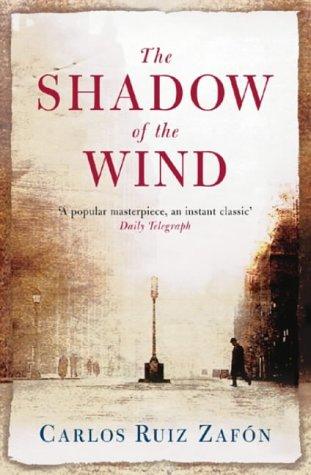
Book Review: Shadow Of The Wind


The book was on the top ten bestseller's list for Kinokuniya. God how shallow that makes me sound. I read mainstream books! Horror! And it's not fantasy for once! Well, not that my life centers solely on fantasy books, but you've probably noticed by now that I'm not the type to lean into more 'realistic' books so often, except when they're good. GOOD. Think Dan Brown and some of dad's Grisham books. This here, ladies and gentlemen, is no exception. With a well-rounded blend of horror, romance, politics and humor, 'Shadow of the Wind' is no ordinary Victorian thriller. Ambitious would be one word to describe it, as it attempts to tackle almost everything. While that may sound dangerous, Carlos Ruiz Zafon pulls it off anyway, and he'll keep you turning pages until you reach the end of the book (I know I took a long time to finish it, but that was purely because of the fact that I was busy. At home this would be the kind of book I finish overnight)

The story is narrated by one Daniel, the son of a Barcelone bookseller, who, as a part of family tradition is allowed to go to a place called the 'Cemetery of Forgotten Books' where he will choose one book and protect it for as long as he lives. When he does, he chooses the book 'Shadow of the Wind' written by one Julian Carax. As it turns out, the book is extremely rare, and it seems that a shady person seems to be after it, ready to offer money for it and known to resort to less than seemly methods to get his hands on Carax books which he later burns. This of course leads to the mystery, as to who this person is and why he hates Carax so. And at the same time, where is Carax? The author was said to have disappeared or died somewhere in France by the time the main character develops an interest in him. Not buying it, young Daniel decides to run his own investigation into the life and history of Carax, hoping to be able to track the man back into the present. Along the way he is helped along mostly by a beggar he helped off the streets named Fumero, who also seems to have a history of his own. This story is quite complex in the sense that there so many subplots that you'll get the impression that the subplots have subplots, and that may sound like it might induce headaches, but in all honesty, it won't.

In fact that is what keeps you turning pages, I think. The characters have so much behind them, and are so alive that it feels like you're feeling them. The effective use of the first-person narrative helps that point along as well, as the thriller takes time off to be a love story at certain moments involving the main character's relationship with his best friend's sister, and at the flashbacks involving Carax. The main character isn't particularly heroic, truth be told, but that's another reason why this book is good. The main character is human enough for you to sympathize for every time shit happens. The story develops by moving ahead with events, as well as filling holes in the history of the characters, tying up just nicely at the end. And although some may find the revelation to be quite predictable, it doesn't in any way hamper the style of this book.

If there is a flaw in this book, it would only be that the events tend to be uneven, in the sense that some things that could have been developed further weren't, like the concept of the Cemetery of Forgotten Books itself. But all in all, it still provides a satisfying, engrossing read.

God bless Lucia Graves for translating this book! (yeah, it was originally Spanish)

9 out of 10. And it probably deserves more.

Tuesday, October 04, 2005

Book Review: Pour Your Heart Into It


How many of us here drink coffee? And how many of us have had Starbucks, at least once? And how many of those are fans of the brand? What is it that we like about the establishment? The coffee is great but what really kept us coming back? Well, according to Howard Schultz, the CEO of Starbucks Corporation, it's the atmosphere, the romance of drinking coffee and the warmth their stores exudes.

Throughtout this book, Howard tells us with great enthusiasm about how Starbucks became what it is now, from a humble little store in Seattle selling (only!) dark-roasted beans to a multi-billion, multi-store, multi-multi-multi company. Yeah, this is a business book, people.

What's unconventional about it is that it's actually fun to read. The history of the brand is absorbing and how everything seemed to fall into place just for them is wowing.

Perhaps it's all propaganda? Well, certain parts certainly felt that. I even seriously contemplated about getting a job as a barista down at the Wangsa Maju branch of Starbucks. But their mission statement is really empowering to their employees (here we go, propaganda...) and the company seems to really care about them. Great health plans, a revolutionary stock option called Bean Stock; it all seemed like Starbucks wants to make sure everyone felt like their in a family.

It all looks good on paper, but is it really the truth? *shrugs* I don't know and I'm not going to spend time trying to find out. All I know is that this book is a fascinating read.

I give it a 7 out of 10. (Which means, hey, borrow it from me but don't complain if you don't like it.)

Thursday, September 22, 2005

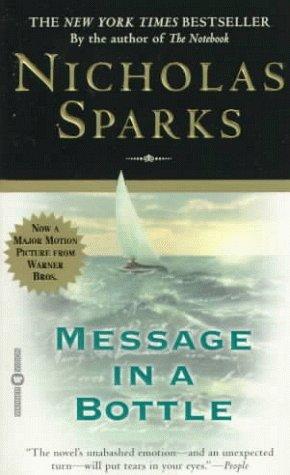
Book Review: Message in a Bottle


Buy a box of Kleenex upon the purchase of this book; you're gonna need it. And guys, read this as far away as possible from persons of the opposite sex; you don't want them to think you're a wussy. (And for the record, I'm not either.) Once you've found a cosy enough closet to dwell in for the hours you'll spend reading this, peel the edges of the book carefully. You're going to want to keep it on a shelf when you're done.

Kleenex. Closet. What's new? It's a Nicholas Sparks book so naturally, this is a book on romance and judging by the fact that it's been made into a movie starring Kevin Costner, I'll go out on a limb and say it was wildly successful with women and SNAGs everywhere.

And rightly so too. As with all of Sparks' books, this is a touching one. By the end, you'll be crying silently and softly to yourself, wondering if you'll ever experience even the briefest moment like those the characters in this book do. (Hence the Kleenex.) And it's the kind of crying that makes you feel good.

However, if you've even read anything by Sparks before this, the effect will be slightly diminished. I've read The Notebook and True Believer, so this is actually the third one I've read. While I was still touched and amazed at the characters Sparks conjured up, at one point I thought to myself, "Hmm... typical Nicholas Sparks scene," right around the time they were making love.

But what wasn't typical about it, depends on whether you were expecting it to end like a normal Nicholas Sparks book. Because u\if you did, then you're going to be in for a neat surprise.

I give it a 7 out of 10.

Tuesday, September 20, 2005

Book Review: American Gods


With a title like that, one might assume that it's a book about the rich and famous in America. To an extent, that is accurate, but the "gods" are no longer rich, nor famous. Who (or, more accurately, what) are Neil Gaiman referring to? To the literal gods, of course. Those deities of the Norse and Hindu, among others. And there are a lot. Ever wondered what happened to Thor? Well, he shot himself in the '70s.

What drove Thor to kill himself? And what made the deities, who are, supposedly, all-mighty and powerful, become so... human? According to Wednesday, who is, the American version of Odin (more on that later), gods feed on prayer and belief. Now, with modern amenities and entertainment, man no longer believe in the old gods, preferring to spend time devoting the new gods, i.e. the television, media... etc.

And why are these gods called American, when they are Nordic or Hindi in origin? You see, (again, according to Wednesday) gods come to new lands when their believers go there, carrying them in their minds, and creating them there. So, using this theory, we'd have a few hundred Odins running around the world.

Throughout the novel, we see their world through Shadow's eyes, who works for Wednesday. Technically, this is a Dan Brown-ish novel. But it has so many elements in it that you won't be able to tell. Short stories are abound. History lessons, too, actually. There're elements of thriller, horror, humour and God knows what else Gaiman thought was suitable to throw in there.

If you're planning to read this, be forewarned that it's going to be a long read. Like, weeks. The pace is slow but not boring. It's just the right kind of speed for a book this ambitious. Gaiman gives you time to put down the book and process all the information, and then think about it some more before continuing. If you're looking for a Dan Brown book, don't bother with this.

I give this book a 7.5 out of 10